
The modern print industry is no longer seen as an option. Speed, flexibility, and durability are a must. We want quicker delivery, consistent colors, and the ability to print on nearly any substrate. Changing attitudes like these are the reasons why UV printing is now one of the top printing technologies in 2025.
With modern UV printing, businesses can get work done faster than with older printing methods and achieve the same high-quality results. Whether for retail displays, custom signage, or industrial parts and promotional products, this printing technique is adaptable to a wide range of materials, keeping things efficient for both standard and custom designs. So, let’s understand what UV printing is, how it works, its benefits, and real-world use cases, and compare it with traditional printing methods.
What is UV Printing?
UV printing is a digital printing process that uses ultraviolet light to dry or cure ink as it is printed. Unlike drying gradually through evaporation or heat, UV-cured ink dries instantly when exposed to UV light. The UV ink is applied in a dry application technique, eliminating spread and edge wicking in flexible materials.
The inkjet technology greatly enhances adhesion to the surface, resulting in long-term, striking detail with bright colors. Unlike traditional methods, UV printing eliminates the drying time, resulting in a faster overall printing process.
Step-by-step explanation of UV ink curing by ultraviolet light
Here is an efficient and precise print production process for UV printing technology:
- Standard design software is used to create a digital design file
- The file is sent to UV printers
- UV inks are sprayed through numerous print heads with incredible accuracy
- By low-pressure mercury vapour UV lamps, the curing reaction is initiated by UV light
- The UV ink dries immediately, finishing off the process
This instant UV-curing process allows processing immediately after application. No smear, no waiting, or additional drying time needed.
Expert insight:
Inkjet printing has attracted significant interest from the additive manufacturing industry in recent years. (New developments and inkjet applications of UV-LED curable inks)
Types of UV Printing Methods and Technologies
These are various types of UV printing technologies that meet specific production requirements. The material, volume, and application determine the appropriate system selection.
Flatbed UV printing
Based on the print materials needed, there are two models of A3-size flatbed UV printers: one has the media fixed (not moving) while the head moves, and the other has the head fixed (not moving) while the print bed moves.
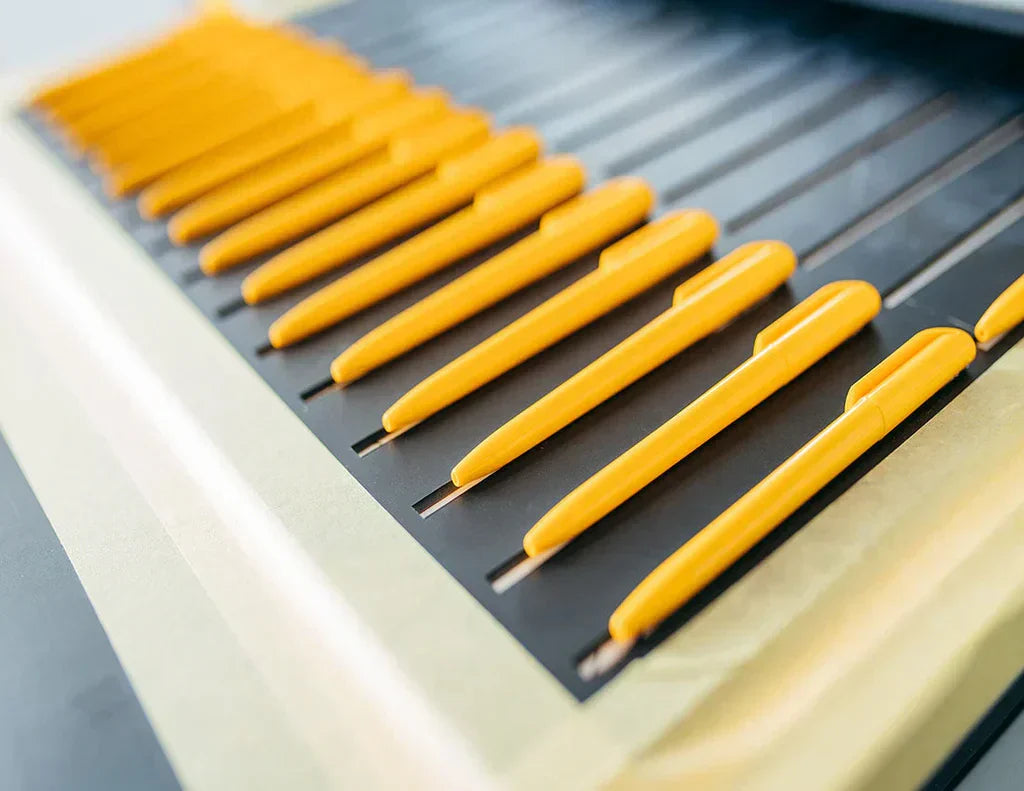
A flatbed UV printer is suitable for producing a wide range of products and is widely used across many fields, such as PAD printing on cell phone cases, toys, pens, and small electronic accessories. This desktop-style machine is a new product in the screen-printing series. Flatbed printers are particularly appreciated for their ability to print on rigid media without mounting or lamination.
Hybrid UV printers (rigid + roll)
A hybrid UV printer combines a flatbed with roll-to-roll functionality. This means one can work with stiff boards as well as flexible print media up to 3280 mm wide, such as vinyl, film, or wallpaper. Hybrid systems are standard in the commercial market, where flexibility is essential.
Direct-to-object UV printing
Some UV printers were not designed for flat or non-flat surfaces. These printers are meant to print directly onto cylindrical objects, such as bottles, jars, pens, and promotional products. This functionality is ideal to cater to the increased popularity of custom gifts and bespoke packaging.
UV LED vs. Traditional UV
Newer systems use UV LEDs instead of mercury lamps. LED bulbs last longer, are more energy-efficient, and emit less heat. This also makes them a good choice for heat-sensitive materials, which may warp or become yellow under other printing methods and curing techniques.
Here's a table to compare features, typical industries, and cost ranges of different types of UV printing technologies:
| Type of Printing Technology | Key Features | Typical Industries | Cost Range |
|---|---|---|---|
| Flatbed UV | Rigid media, precise print | Signage, décor | Medium to high |
| Hybrid UV | Rigid and flexible compatibility | Advertising, packaging | High |
| Direct-to-object UV printing | Low heat, energy efficiency | Industrial, electronics | Medium |
Benefits of UV Printing
Why should your business invest in UV printing? There are many benefits UV printing offers beyond speed.
Instant curing process, higher throughput
The instant-drying process substantially increases production rates. It allows UV printing work to go from design to finished product in no time. This overall efficiency translates to increased UV digital printing speed and faster order fulfillment.
Able to print on a range of materials, like plastics, metal, glass, wood, foam, and leather
UV print works well on most materials, including plastic, metal, wood, leather, rubber, vinyl, glass, and acrylic blocks. Printing directly on these surfaces means no adhesives or mounting are required.
Environmental benefits: fewer VOCs/heat vs. solvent printing
Compared with solvent-based ink machines and traditional drying methods, UV-based, environmentally friendly methods significantly reduce emissions. “Specially formulated UV inks emit lower volatile organic compounds (VOCs) than solvent inks, aligning with stricter environmental regulations and sustainability goals,” Tim Smith of Zeller+Gmelin’s Product Management Team pointed out. “They offer instant curing and reduced energy consumption during the print, thereby enhancing productivity.
Case example: One small retail brand used a Roland flatbed printer to create short-run signage for its in-store promotions. And with faster curing of specialized inks, the turnaround time decreased by 40 percent. It also reduced waste, since vibrant prints could be inspected and completed right away without drying issues.
What Others Don’t Tell You (Unique Insights)

As advantageous as UV printing is, some practical considerations are sometimes overlooked.
Not all materials absorb ink the same way. Pre-treatment is necessary for certain plastics, metals, and coated surfaces to promote adhesion. Skipping this step may cause UV curable ink to peel or chip.
While many UV printers are efficient, ongoing expenses add up over time. During an average lifecycle for a UV printing system (5 years), you could expect to spend significant amounts on ink alone, along with lamps (UV LED) and overall maintenance.
The choice between LED UV lamps and conventional lamps will depend on production volume, material composition, and service.
UV Printing Myths vs Reality
One common myth is “UV prints always cost more.”
Fact: There may be a higher equipment investment, but with less waste, fewer reprints, and faster runtimes, your overall costs for UV printing are typically lower.
A case study of a print shop specializing in packaging that integrated visual feedback with its UV printers observed a 50% reduction in material wastage and an improvement of 30% in output speed. Another business unit mentioned that after they switched to UV printing, “less error & waste” was a primary reason for their 270% increase in profit.
Conclusion
UV printers are all-rounders that aren't just fast and highly durable but also offer print quality and versatility. By knowing what ultraviolet printing is, how it works, and its differences from traditional printing processes, you can decide which approach you should take when producing printing materials.
Whether for signs and decor, industrial parts, or promotional items, Ultraviolet printing offers a reliable solution for even the most challenging substrates.
Get the world-class replacement print heads, service support, and savings for your UV printers through AllPrintHeads.
Frequently Asked Questions
What does UV printing do?
It cures ink as needed with ultraviolet light and creates permanent, vivid marks on a wide variety of surfaces.
What is the difference between UV printing and normal printing?
Normal printing is air- or heat-dried, while UV printing uses LED UV light to provide instant curing.
What are the disadvantages of UV printing?
UV printing isn’t perfect. It usually costs more upfront, especially for small runs. Some UV inks can feel slightly raised and less flexible, so they may crack on bendy materials. Color matching can be tricky, and not all surfaces accept UV ink without special treatment.
How long does UV printing last?
UV printing typically lasts 5 to 10 years, often longer indoors. The ink cures instantly under UV light, making prints highly resistant to fading, scratching, and moisture. With proper care and limited sun exposure, UV prints can stay vibrant and sharp for many years.
