
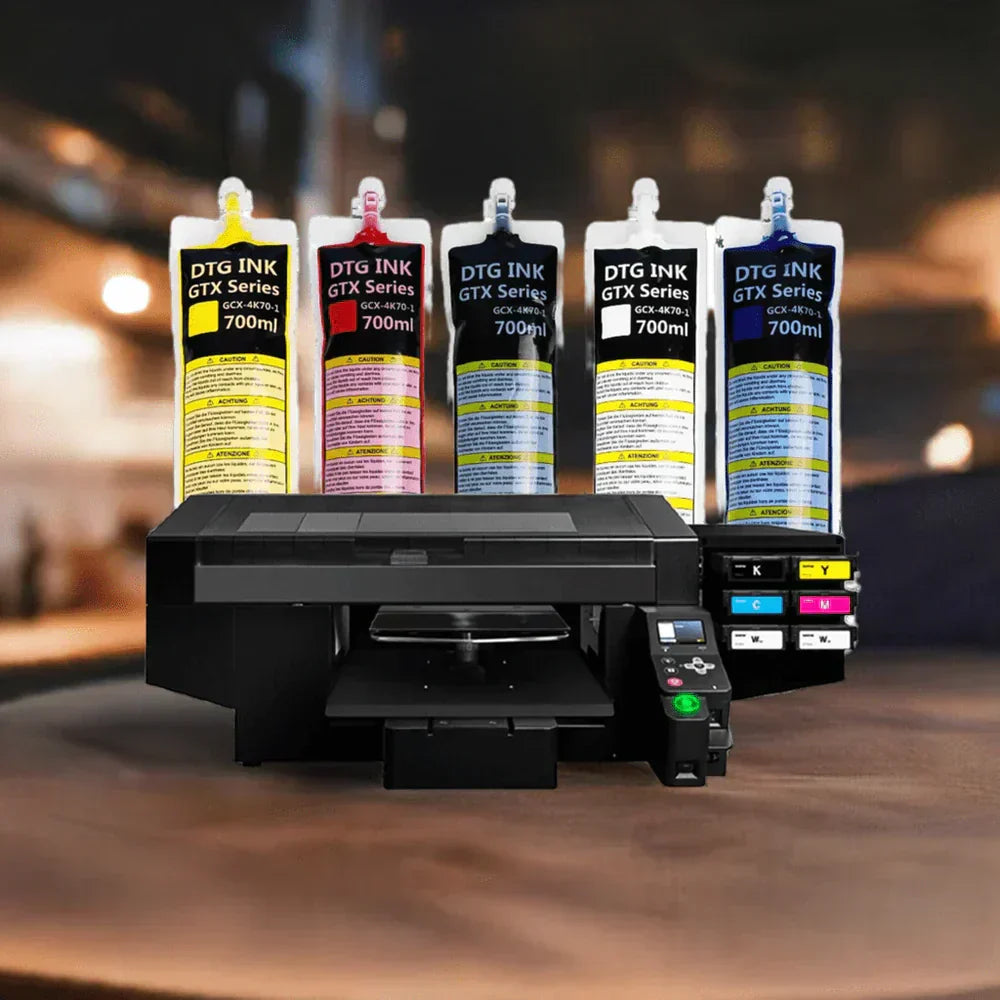
You can find different types of printer inks for one reason: different types of printers demand different types of ink. Pick the wrong ink and you pay for it in faded colors and clogged printheads. That’s why we have created this guide, to help you understand
-
What each type of printer ink actually does,
-
Where types of printer ink work best, and
-
How to choose the right printer ink for inkjet printers, laser printers, or inkjet and laser printers.
Quick Overview/TL;DR
Dye-based inks deliver the most vibrant colors and smooth gradients, but they fade faster and struggle with water exposure.
Pigment inks and pigment-based inks last significantly longer and resist moisture, trading off some color range for print quality, high-quality prints, and consistency.
Sublimation ink permanently bonds with polyester fabric and coated surfaces, making it ideal for apparel and hard goods but useless on standard paper.
Eco-solvent inks, UV inks, latex inks, and solvent inks are built for signage and commercial printing, prioritizing durable prints, adhesion, and outdoor performance over simplicity and cost-effective options.
Inkjet printers use liquid ink, while laser printers use toner, a dry powder. Toner is more cost-effective for high-volume printing tasks and large print jobs, as it lasts longer and reduces the cost per page. Laser printers also excel at printing speed, making them ideal for busy office environments that require rapid output and efficiency.
Consumer Reports notes that a low-priced inkjet can lead to cartridge replacement costs of $70 a year or more, while toner for a black-and-white laser might be about $15 a year.
(https://www.consumerreports.org/electronics-computers/printers/buying-guide)
There is no universal “best” ink type, only the right ink for your printer model, material, environment, and long-term maintenance tolerance, especially when buying printer ink online for high-volume printing or photo printing.
Why There Are So Many Types of Ink
Not all printer ink or types of printer ink are made the same because different printers, like inkjet printers and laser printers, do different types of printer jobs. These printer jobs range from printing photos and documents to pressing graphics onto fabric.
To keep things simple, understand this: most ink differences come down to two core dimensions, the colorant (dye inks vs. pigment inks) and the carrier (liquid ink like aqueous or solvent or solid ink).
The colorant is what creates the color. There are two main types. Dye-based inks and pigment-based inks.
Dye-based inks and dye inks fully dissolve in liquid ink, producing rich, vibrant colors. The downside? They soak into materials and break down faster when exposed to water or UV light. Pigment inks, pigment-based inks, and types of printer ink use tiny solid ink droplets suspended in liquid ink. These sit on the surface for better print quality, ink quality, and resistance to fading.
The carrier delivers the colorant. Aqueous ink relies on water for inkjet printers typically. Eco-solvent inks use chemical carriers that bond to vinyl. UV ink hardens under UV light, while latex inks combine water with polymers for flexibility.
Inkjet printers use liquid ink, while laser printers use toner powder. Laser printing works by using static electricity, light, and heat to transfer toner onto paper. The toner used in laser printers is powdered and made up of toner particles.
During the laser printing process, the transfer toner step is crucial: toner particles are attracted to a drum using electrostatic charge, then transferred and fused onto the paper to create text or images.
Different types of ink exist because no single ink excels at everything, from high-quality prints to archival-quality prints.
Major Types of Printer Ink (Deep Dive)
With colorant (dye inks, pigment inks) and carrier (liquid ink, solid ink) clear, it’s easier to grasp types of printers, printer ink types, and ink types. Each type of printer ink suits specific printing technology, printers, ink cartridges, toner cartridges, inkjet cartridges, printer cartridges, or ink and toner cartridges.
Laser toner is used in most laser printers, offering optimal performance for high-volume and business printing. Color laser printers are capable of producing vibrant, sharp color prints for business graphics and medium-quality photos, but inkjet printers generally offer superior quality for photo printing. Solid ink is used in some color laser printers and produces vibrant colors.
| Ink Type | Works Best On | Strength | Watch-Out |
|---|---|---|---|
| Dye (Aqueous) | Photo papers, glossy photo media | Very vibrant colour | Faster fade and water sensitivity |
| Pigment (Aqueous) | Documents, fine art papers | Better longevity and water resistance | Higher clog risk if not used regularly |
| Sublimation | Polyester and polymer-coated blanks | Dye bonds into the material | Will not work on cotton the same way |
| Eco-Solvent / Solvent | Vinyl, wraps, outdoor signage | Strong adhesion and durability | VOCs and ventilation needs |
| UV-Curable | Rigid media like wood, metal, glass | Instant curing and broad substrate range | Hardware cost and flex-crack risk |
| Latex | Indoor and outdoor signage | Low odor and indoor friendly profile | Needs heat curing and compatible printers |
Dye-Based (Aqueous) Ink
Dye-based inks and dye inks use water-soluble dyes in inkjet printers and inkjet ink. Color dissolves in liquid ink for bright, vibrant colors and smooth gradients. Trade-off: dye-based inks have less durability, which means they can fade or smudge; therefore, they are ideal for casual inkjet printing.
Dye-based ink is made from water-soluble dyes and is best for photo printing. Dye-based inks work especially well with glossy paper, which is popular for photo printing because it produces vibrant, sharp images.
Best uses: home printing, photo printing, and everyday color business documents.
Pigment-Based (Aqueous) Ink
Pigment inks and pigment-based ink suspend solid particles in liquid ink for inkjet printers. Particles stay on the surface for high-quality prints, water resistance, and durable prints. They last longer but cost more and need maintenance to avoid clogs in printer supplies.
Best uses: business documents, fine art, archival quality prints. While pigment inks offer durability, they may not always produce optimal results on glossy paper, which can affect the vibrancy and finish of photo prints.
According to Henry Wilhelm, founder and director of research at Wilhelm Imaging Research, “We look forward to posting print permanence test results for the new inks on a variety of media as the data become available. It is one of the realities of the print permanence testing field that the more stable the print, the longer the tests take to complete.”
Sublimation (Dye-Sub) Ink
Sublimation ink uses a special dye that turns into gas when heated and bonds permanently with polyester or coated surfaces. Instead of sitting on top, the color becomes part of the material. This creates vibrant, durable results but only works on specific substances and requires special paper and heat presses to function properly.
Best uses: polyester apparel, mugs, phone cases, and coated hard goods.
Solvent Ink
Solvent ink uses pigment combined with chemical solvents that allow it to bond strongly with non-porous materials. This makes it extremely durable and resistant to water, sunlight, and abrasion. The downside is strong fumes, higher safety requirements, and the need for proper ventilation during printing.
Best uses: outdoor banners, vehicle wraps, and vinyl graphics.
Eco-Solvent Ink
Eco-solvent ink is a milder version of solvent ink with lower VOC emissions. It still offers strong adhesion and durability but produces less odor and is safer for indoor environments. Drying times can be slower, and prints may require outgassing before finishing or laminating.
Best uses: indoor signage, retail displays, tradeshow graphics.
UV-Curable Ink
UV-curable ink hardens instantly when exposed to ultraviolet light during printing. This allows it to print on a wide range of rigid and flexible materials with immediate handling. It is highly durable, but the equipment cost is higher and prints can crack if used on materials that flex too much.
Best uses: rigid signage, packaging, glass, metal, and wood.
Latex Ink
Latex ink is water-based and uses polymer particles that form a durable layer once cured with heat. It offers a balance between flexibility and strength while remaining low in odor and safer to use indoors. The curing process can take longer and requires printers designed for latex technology.
Best uses: banners, wallpapers, flexible signage, and indoor and outdoor graphics.
Specialty and Eco Inks (Soy, DTF, Transfer Inks)
Specialty inks are designed for niche applications. Soy ink is plant-based and used mainly in commercial offset printing for sustainability. Other specialty inks include DTF pigment inks and heat transfer inks for apparel. These inks solve specific problems but usually only work with dedicated equipment.
Best uses: sustainable printing, custom apparel, specialty production workflows.
How to Choose the Right Ink for Your Setup

Every printing workflow is different, which means the right ink depends on how and what you print. Start with printer and printhead compatibility. Next, consider your media or substrate; paper, fabric, vinyl, metal, or glass all require different ink behavior. For laser printers, it is important to use paper with little or no resin coating, as resin-coated paper can melt during the heat fusing process and damage the printer.
Durability matters too. Some applications need resistance to fading, water, or abrasion, while others do not. Finally, look beyond the upfront price and consider the cost per milliliter and long-term maintenance, including cleaning, downtime, and printhead lifespan.
Risks of Using the Wrong Ink
Using incompatible or mixed ink types can cause immediate and long-term problems. Community reports from printer technicians and user forums consistently mention clogged printheads, unstable colors, and poor adhesion. In many cases, damage is permanent, leading to costly repairs, inconsistent output, and a shortened printer lifespan.
Maintenance and Best Practices for Different Ink Types
Pigment vs Dye Inks
Pigment inks need more frequent cleaning because particles can settle and clog nozzles, while dye inks flow more easily but still require regular use to prevent drying and uneven color output.
Solvent, Eco-Solvent, and UV Inks
These inks require proper ventilation and controlled curing. Solvent types need airflow for fumes, eco-solvent needs out-gassing time, and UV inks rely on precise curing to avoid adhesion or cracking issues.
Ink Storage and Handling
Store inks sealed, away from light and heat. Follow shelf-life guidelines, avoid temperature swings, and never mix old and new ink, as exposure and age can affect performance and stability.
Cost Comparison of Ink Types (What others don’t tell you)
Dye-based inks are generally the cheapest per milliliter, while pigment inks cost more due to longevity. Inkjet printers typically have lower initial costs but can become expensive for high-volume printing. In contrast, laser printers, which use laser toner, are more cost-effective over time due to a lower cost per page and longer-lasting toner cartridges. Solvent, eco-solvent, UV, and latex inks carry higher upfront costs. Also, you must keep in mind that true cost includes maintenance, wasted prints, ventilation, downtime, and how often printheads need replacement.
Use Cases and Real-World Examples
A professional photographer would often choose pigment ink because it delivers long-lasting, fade-resistant prints suitable for display and sale.
A sign business producing banners and retail graphics typically relies on eco-solvent ink for its strong adhesion and durability.
A custom apparel brand printing polyester T-shirts generally uses sublimation ink so designs can permanently bond into the fabric without cracking or peeling.
A print shop creating signage on materials like wood or metal would prefer UV ink for its instant curing and strong surface adhesion.
Where to Buy and Trusted Suppliers
When buying ink, confirm compatibility with your printer and printhead before ordering. OEM inks offer reliability, while high-quality third-party options can reduce costs if sourced carefully. Allprintheads is a trusted U.S. supplier known for verified inks, printheads, and components, helping buyers avoid counterfeit or low-quality products. If you need affordable, high-quality inks for your printing needs, do visit our website.
Environmental and Safety Considerations
Solvent-based inks release VOCs and require proper ventilation and safe handling. Eco-friendly alternatives like latex and soy inks reduce emissions and indoor air concerns. Always follow local disposal guidelines, never pour ink down drains, and store unused ink responsibly to limit environmental impact and exposure risks.
Conclusion
Choosing the right printer ink is about matching your printer, material, and durability needs. Once you understand how different inks behave, decisions become much simpler, and long-term printing costs stay under control.
Common FAQs
What’s the difference between dye and pigment ink?
Dye ink dissolves into materials for vibrant color, while pigment ink sits on the surface, offering better durability, water resistance, and long-term fade protection.
Can I use sublimation ink in a regular inkjet printer?
Only if the printer is dedicated to sublimation. Using sublimation ink in a standard inkjet previously filled with other inks can damage printheads.
Is eco-solvent ink safe for indoor printing?
Eco-solvent ink is safer than traditional solvent ink, but proper ventilation is still recommended, especially in enclosed or high-volume printing environments.
What kind of ink does a UV printer use?
UV printers use UV-curable ink that hardens instantly under ultraviolet light, allowing printing on rigid and flexible materials with immediate handling.
How long do pigment prints last?
Under proper conditions, pigment prints can last decades and often over 100 years, making them suitable for archival documents and fine art printing.
Does mixing ink types damage my printer?
Yes. Mixing incompatible inks can cause clogging, color instability, poor adhesion, and permanent printhead damage that often requires replacement.
