
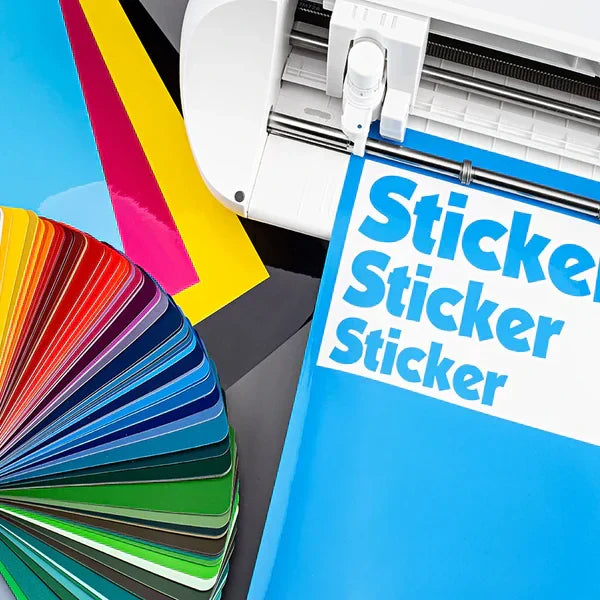
So what is permanent vinyl used for, exactly? That question comes up constantly. Whether you're a crafter choosing the right material for a tumbler project or a business owner evaluating durable signage options, permanent vinyl keeps coming up as the answer. And the numbers reflect it. According to Grand View Research (2024), the global printed vinyl market was valued at USD 9.53 billion in 2024, with advertising and promotional applications driving most of that growth.
This pressure-sensitive adhesive vinyl is designed for long-term adhesion to surfaces such as glass, metal, plastic, and sealed wood. It's become a standard for outdoor signs, car decals, product labels, and promotional displays. Unlike removable vinyl, permanent adhesive vinyl is designed to withstand weather, handling, and time without peeling off after a few weeks.
Here's what you need to know about how it works and where it performs best.
What Is Permanent Vinyl?
Definition & Composition
At its core, permanent vinyl is a pressure-sensitive adhesive vinyl with a strong bonding formula engineered to stick and stay stuck. It typically comes in three layers:
- A paper or film backing
- A vinyl face layer (usually calendered or cast PVC)
- A solvent-based or acrylic-based adhesive that forms a powerful bond once applied
Take Drytac Polar Transit Matte White Polymeric Self-Adhesive Vinyl, one of the most widely used permanent vinyl films in the industry. Polar Transit is a product designed for a specific job, which it does very well. If you need to apply graphics to smooth, flat surfaces that are in tough locations, such as vehicle sides and public arena displays, Polar Transit delivers the ideal solution. It delivers a perfect combination of vibrant graphics with long-term and outdoor durability for transportation signage
Removable vinyl uses a lighter adhesive meant for easy removal. Permanent vinyl? Built for projects where longevity is the whole point. You'll find it available in glossy finish, matte, and specialty textures, depending on the brand.
How Permanent Vinyl Works (Adhesive Science Simplified)
The adhesive on permanent vinyl doesn't just "stick" the moment you press it down. According to research published in the journal Polymers (PMC, 2021), acrylic pressure-sensitive adhesives form bonds through a combination of tack (initial contact adhesion), peel resistance, and shear strength. These properties work together, not independently.
When first applied, the adhesive contacts the surface and begins to flow into the material's microscopic textures. Over the next 24 to 72 hours, bonding strength increases as the adhesive fully wets the substrate. That's why vinyl on a smooth surface like glass or metal feels harder to remove over time. The bond genuinely strengthens.
Temperature plays a role, too. 3M's product bulletins recommend applying vinyl films between 4°C and 38°C (roughly 39°F to 100°F), with an optimal range of 18°C to 22°C (64°F to 72°F). Going outside those ranges can cause bonding problems.
Quality permanent vinyl handles UV rays, rain, temperature swings, and general weathering without breaking down.
What Is Permanent Vinyl Used For?
The applications run much broader than most people realize. Below are the major categories.
1. Outdoor Signage & Decals
Probably the most common use. Permanent vinyl is the backbone of storefront branding, outdoor signs, vehicle decals, and window graphics. Durability is non-negotiable here. These applications are exposed to direct sunlight, rain, and fluctuating temperatures daily. Fading, cracking, or peeling isn't acceptable.
Removable vinyl can't hold up under those conditions. For any outdoor application where the graphic needs to last beyond a few months, permanent is the only real choice.
2. Product Labels & Packaging
Water-resistant labels represent a huge use case. Cosmetic packaging, for instance, bottles sitting in humid bathrooms that are constantly splashed. Or food container labeling that needs to withstand refrigeration and handling (non-direct-contact applications, naturally). Permanent vinyl delivers durability without the label peeling off.
For businesses running label-printing operations, equipment quality matters just as much as the choice of vinyl. Reliable printheads keep print quality consistent across hundreds or thousands of labels, which directly affects how professional your finished product looks on a shelf. A clogged or underperforming printhead produces streaky, inconsistent output. When labels are the first thing customers notice about a product, that inconsistency costs real money.
3. DIY Crafts & Personalization Projects
This is where permanent vinyl exploded in popularity. Crafters use it on mugs, tumblers, laptop covers, phone cases, water bottles, and pretty much any hard, smooth surface. If you own a Cricut or Silhouette cutting machine, you've likely worked with this material already.
One thing that trips people up constantly: permanent vinyl is NOT heat transfer vinyl (HTV). They look similar on the roll. Both get cut with a cutting machine. But they work completely differently.
- HTV uses heat to bond with fabric.
- Permanent vinyl uses a pressure-sensitive adhesive and sticks to hard surfaces.
Trying to iron permanent vinyl onto a t-shirt won't work. Using HTV on a coffee mug without a heat press? Same problem. Know the difference before starting your project.
4. Business Branding & Promotional Materials
Company logos on windows, walls, doors, pop displays, trade show graphics, event branding; permanent vinyl shows up everywhere in commercial settings. Randy Scarborough, Vice President of Marketing at FedEx Office, summed it up well in their signage survey release: "Effective signage is not limited to the front door. It encompasses everything from in-store materials to car clings to posters and banners." (Source: FedEx Office Newsroom)
The investment isn't just from buyers, either. The companies manufacturing this material are betting big on continued demand. ORAFOL Group (maker of ORACAL vinyl) invested approximately USD 160 million to expand production at its Brandenburg headquarters, with two new production halls scheduled to be built by 2025. Avery Dennison spent USD 136.1 million on R&D in 2024 alone to meet growing demand for printed signage. When manufacturers are committing that kind of capital, the market trajectory speaks for itself.
For businesses that produce branded stickers, labels, or decals in-house, keeping a supply of dependable printer parts and accessories on hand prevents costly production delays. Downtime from a failed component during a rush order can cost more than the part itself once you factor in missed deadlines.
5. Industrial & Commercial Applications
Craft blogs rarely cover this. But it's one of the biggest use cases for permanent vinyl.
Warehouse labeling. Equipment identification tags. Safety signage. Floor markings in manufacturing facilities. All of these rely on permanent adhesive vinyl because the labels must withstand heavy use, chemical exposure, and rough handling. Under OSHA standard 29 CFR 1910.145, workplaces must use accident-prevention signs and tags that remain visible and legible. Durable permanent vinyl meets that standard, where cheaper materials would fall short.
Permanent Vinyl vs Removable Vinyl: What's the Difference?

There are differences between permanent and removable vinyl. Let’s take a look at how they differ:
| Feature | Permanent Vinyl | Removable Vinyl |
|---|---|---|
| Adhesion Strength | High | Medium |
| Removal Difficulty | Difficult once cured | Easy, minimal residue |
| Best For | Long-term projects, outdoor use, labels | Temporary decor, seasonal displays, rentals |
| Adhesive Residue | Likely on removal | Minimal to none |
| Typical Outdoor Durability | 5–8 years (varies by product) | Not rated for extended outdoor use |
These aren't marketing distinctions. The adhesive formulations differ chemically, which is why "leaving removable vinyl on longer" won't make it perform like permanent.
How Long Does Permanent Vinyl Last?
Durability depends on the product grade and the conditions under which you use it. Here's what to expect based on manufacturer-rated specifications:
- Standard calendered vinyl (mid-range films): Typically rated for 5 to 6 years of outdoor durability for standard colors, with metallics and specialty finishes lasting slightly less.
- High-performance calendered vinyl: Often rated for up to 7 years outdoors with strong UV resistance and gloss retention.
- Economy-grade vinyl: Usually 2 to 3 years outdoors before noticeable fading and edge lifting begin.
These ratings assume proper application on clean, smooth surfaces within recommended temperature ranges. Real-world results vary based on climate, sun exposure, and surface prep. A vinyl decal on a south-facing window in Arizona won't last as long as the same decal on a shaded storefront in Oregon.
UV resistance is the biggest variable. Vinyl with poor UV inhibitors fades and turns brittle far faster, regardless of what the packaging claims.
Surfaces Permanent Vinyl Works Best On
Best results come from smooth, non-porous surfaces: glass, metal, plastic, ceramic, and finished wood (sealed or varnished).
Surfaces to avoid:
- Fabric (use HTV instead)
- Unsealed porous wood (adhesive can't bond to rough texture)
- Silicone (nothing adheres well to silicone)
Not sure about a specific surface? Do a small test piece first. Give it 24 hours to cure before judging adhesion.
What Others Don't Tell You About Permanent Vinyl
Below are a few interesting facts that others would never tell you:
- Cure time affects longevity. Handling a vinyl-applied item right after application doesn't give the adhesive a fair chance to reach full bond strength.
- Not dishwasher safe without sealing. The heat, water pressure, and detergent in a dishwasher break down the adhesive over time. Hand wash only, or seal it first.
- Removal can damage surfaces. Pulling permanent vinyl off painted or delicate surfaces often leaves adhesive residue or strips the finish.
Common Mistakes When Using Permanent Vinyl
When using permanent vinyl, there are a few things that you need to keep in mind to avoid blunders:
- Applying to a dirty surface. Oils, dust, and finger residue block proper adhesion.
- Skipping the cure time. That 24-hour window matters more than people think.
- Using it for temporary decoration. That's what removable vinyl exists for. You'll regret it if you try to peel permanent vinyl off a rental apartment wall.
- Confusing it with HTV. Happens more often than you'd expect. Always ends in a wasted project.
How to Apply Permanent Vinyl Properly
Now that you are aware of the mistakes, let’s take you through the right ways of applying permanent vinyl:
- Clean the surface with isopropyl alcohol and let it dry completely.
- Cut your desired shape or design using a cutting machine with the right settings.
- Weed the excess vinyl carefully (a good weeding tool makes this step far easier).
- Apply transfer tape over the design and smooth it down firmly.
- Place it on your surface, then use a scraper or a credit card to pop any air bubbles.
- Peel back the transfer tape slowly at a sharp angle.
- Allow a full 24-hour cure time before using or handling the item.
That last step gets skipped more than any other. Don't rush it.
When Should You NOT Use Permanent Vinyl?
Skip it for temporary wall decor, rental property applications, or short-term event signage where easy removal is the priority. If you expect to swap designs seasonally or want flexibility without risking surface damage, removable vinyl or static cling is the better call.
FAQs
Is permanent vinyl really permanent?
It's extremely long-lasting and hard to remove, but "permanent" is relative. With enough heat and effort, you can take it off. Just expect adhesive residue and potential surface damage.
Can permanent vinyl go in the dishwasher?
Not without a sealant. Heat and agitation inside a dishwasher degrade the adhesive. Hand wash only, or apply a waterproof sealer.
How do you remove permanent vinyl?
Heat it with a hair dryer or heat gun to soften the adhesive, then peel slowly at an angle. Use an adhesive remover like Goo Gone to remove any leftover residue.
Can permanent vinyl be used outdoors?
Absolutely. Outdoor use is one of its primary applications. Quality permanent vinyl is rated for years of weather and UV exposure.
Is permanent vinyl waterproof?
The vinyl face is waterproof. The adhesive is water-resistant, though prolonged soaking can weaken the bond, especially on less-than-ideal surfaces.
Conclusion: Is Permanent Vinyl Right for Your Project?
When a project calls for long-term durability, outdoor resistance, or a professional finish that holds up over months and years, permanent vinyl is almost always the right pick. It works for business branding, craft personalization on hard surfaces, product labels, and industrial applications where the material needs to take a beating.
For anyone running a print shop or crafting business, pairing quality vinyl with reliable equipment from AllPrintHeads means fewer production headaches and better output, whether you're printing labels, decals, or full-color graphics. Match the vinyl to the project, prep your surfaces properly, and give it time to cure. Those three steps determine whether your permanent vinyl projects hold up the way they should.